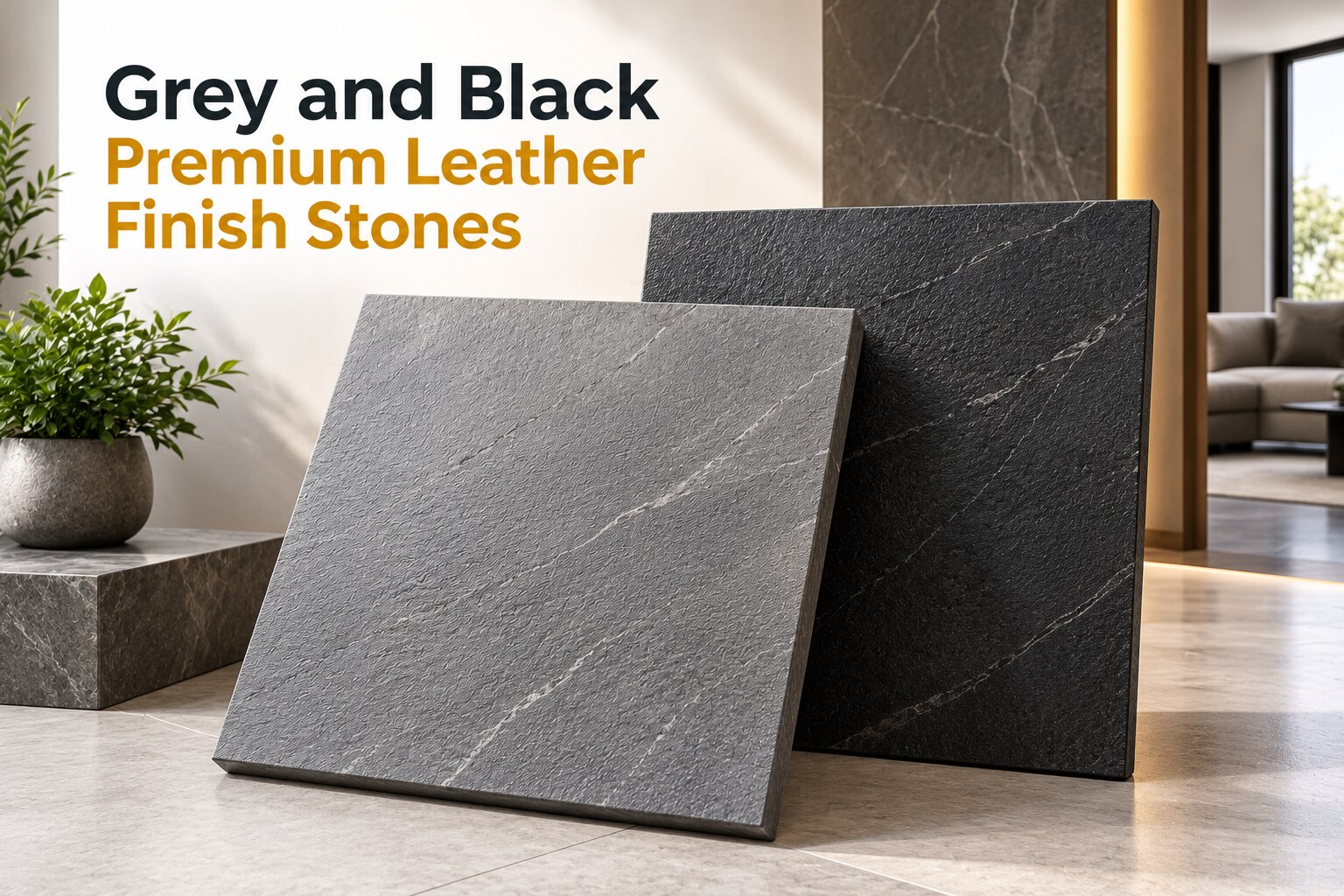
A premium leather finish is not guaranteed by a colour name or a supplier’s description. You need to compare the actual stone, define measurable acceptance criteria, and match the material to Telangana’s sun, monsoon exposure, cleaning demands, and intended traffic before placing a bulk order.
Key takeaways
- Approve a physical control sample or site mock-up before placing the bulk order.
- Compare shade, texture, thickness, calibration, edge quality, and slip performance—not showroom labels.
- Specify crates, batch separation, replacement quantities, delivery sequence, and inspection records.
- Match grey or black stone to the property’s traffic, drainage, maintenance, and design requirements.
What should “premium” mean when you compare grey and black leather-finish stone?
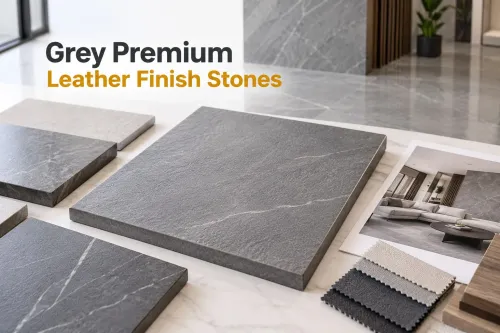
Premium means repeatable material, not the darkest colour or an attractive showroom label. For grey and black premium leather finish stones for properties in Telangana, approve a physical control sample or site mock-up before ordering.
| Control | Grey Tandur limestone | Black stone |
|---|---|---|
| Colour and movement | Exact grey range, fossils, bedding lines, veining, directional movement, and open texture | Specify charcoal, graphite, blue-black, or black with natural veining |
| Leather finish | Record brushing depth and sheen; identify open and filled pits | Match the approved texture, sheen, and pit treatment |
| Structure | State permitted cracks and bedding direction | Identify the geology before comparison with black granite |
| Dimensions | Set minimum thickness, calibrated thickness, flatness, and length and width tolerances | Apply the same measured limits to every lot |
| Edges and cutting | Approve edge finish, chips, and cut-corner behaviour | Trial cutting because dark edges and failures are conspicuous |
Grey Tandur limestone is sedimentary; it is not a direct substitute for black granite. Require the black stone’s geology and technical data, then inspect both samples dry and wet. Water can deepen colour, while dust, hard-water deposits, scratches, and efflorescence show more readily on dark stone.
Put the range, measurements, inspection method, and rejection process in the purchase order. A colour photograph cannot control thickness variation, edge chips, or the proportion of pieces that fail during cutting.
How will the finish look and perform in Telangana conditions?
Leather finish is a mechanically brushed texture, not a uniform technical standard. For grey and black premium leather finish stones for properties in Telangana, ask the processor to identify the reference sample, texture depth, surface reflectance, filled or unfilled pits, and expected shade range. Two processors can produce visibly different results from the same stone.
1. Approve the actual finish through a dry and wet sample. The texture can provide more apparent grip than a polished face, but “leathered” is not a wet-slip rating. Require a wet slip test on the selected stone for pool surrounds, ramps, wash-down areas, public entrances, and monsoon-exposed paving.
2. Run a cleaning trial before approving high-footfall commercial areas. Brushed surfaces can retain soil, oil, cement residue, and biological staining. Use only stone-compatible cleaners; limestone can etch under vinegar, acidic bathroom products, cement haze removers, and other acid-based chemicals.
3. Inspect exposed samples in direct Telangana sun because dark surfaces absorb more solar radiation and become hotter. Consider shaded rest areas on terraces, courtyards, and pedestrian routes.
4. Agree on maintenance frequency, hard-water treatment, joint colour, and sealer type before installation. A penetrating sealer can reduce staining or water uptake, but it cannot fix ponding, rising damp, poor drainage, or movement cracks.
Which property uses suit grey and black leather-finish stone, and how should it be installed?
Choose grey and black leather-finish stone by location and loading; one “premium” grade cannot cover a property. Grey and black premium leather finish stones commercial projects need application-specific specifications, especially where traffic, water, heat, or handling changes.
| Application | Specify before ordering |
|---|---|
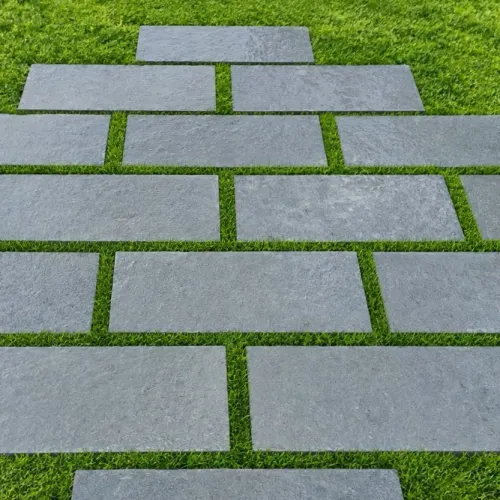
| Exterior paving | Thickness, flexural capacity, bedding, falls, joints, and wet-slip result |
| Driveways | Vehicular load, slab thickness, reinforced base, edge restraint, and turning areas |
| Patios | Outdoor thickness, drainage, heat exposure, and joint sealant |
| Walkways | Pedestrian loading, wet-slip performance, edge finish, and accessible transitions |
| Terraces | Water absorption, substrate movement, heat, falls, drainage, and compatible bedding |
| Feature walls | Cladding thickness, anchoring, panel weight, wind exposure, and joint detail |
| Stair treads | Structural thickness, nosing, support, anti-slip groove, and edge-chip resistance |
| Pool surrounds | Wet-slip test, water absorption, coping detail, drainage, and chemical-cleaning plan |
| Commercial entrances | Wet-slip result, abrasion, cleaning trial, joint colour, and replacement stock |
| Interior floors | Flatness, calibration, wear, stain resistance, grout width, and sealer compatibility |
| Coping and edging | Thickness, overhang, drip or drainage groove, corners, and freeze-free movement detail |
A wall-cladding stone is not automatically safe for vehicles, steps, wet areas, or thin exterior panels. For outdoor work, compact the subgrade, form falls toward drains, use a compatible concrete or mortar bed where required, and place movement joints at plane changes and large uninterrupted areas.
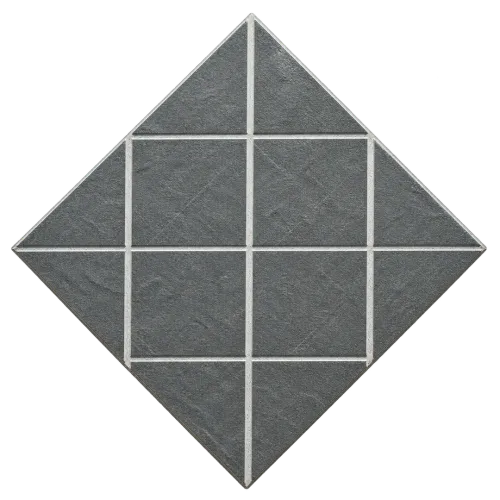
Set joint width and jointing material before production; pale efflorescence and mismatched grout stand out on dark stone. Confirm the underside and thickness permit dry laying before choosing it, then trial cutting, mitres, nosings, grooves, and corners because brushed edges can chip around pits or weak grain.
The face sealer cannot correct ponding, rising damp, poor drainage, or movement cracks.
What must a bulk specification and delivery plan control?
Control the purchase order and delivery plan together; a colour approval alone will not prevent thickness failures, chipped edges, or unusable pieces.
1. State the application, stone variety, slab or tile format, nominal and calibrated thickness, length and width tolerances, flatness, finish side, edge treatment, weight per piece, packing method, and breakage allowance.
2. Request reports for the actual stone variety and, where practical, the production lot. Check water absorption and bulk specific gravity under ASTM C97/C97M, compressive strength under ASTM C170/C170M, flexural strength under ASTM C880/C880M, and abrasion resistance under ASTM C241/C241M. Judge each result against the intended application; one strength number does not approve every use.
3. For grey and black premium leather finish stones bulk property supply, inspect representative bundles before dispatch. Record lot numbers, quarry or bench source, production date, approved sample, and quantities by format.
4. Ask how slabs are separated, corner-protected, labelled, and loaded. Calculate handling from piece weight and site access, not area alone. Reserve same-lot replacements for stair treads, entrances, and visible feature walls.
5. Write the acceptance procedure into the order. Define action for shade variation, cracked pieces, chipped edges, thickness failures, and short deliveries, including inspection timing, photographs, rejection, replacement, and freight responsibility.
This process turns grey and black premium leather finish stones bulk property supply into a traceable delivery rather than a visual gamble.
How should you approve and order material for a large residential or commercial property?
Approve the full order only after a representative mock-up shows several grey and black pieces, not one small showroom tile. Check the shade range, veining direction, leather depth, wet appearance, joint colour, edge details, and cleaning result under the lighting used on the property.
Ask Agarwal Stone Company, or another regional supplier, for the actual control sample, quarry and production-lot details, available formats, thickness and calibration data, technical reports, packing plan, and application-specific quotation. Confirm whether the grey and black products share a source and production period, then agree how rejected or replacement pieces will be identified and handled.
| Residential bulk orders | Commercial projects |
|---|---|
| Retain matching pieces from the same production lot for repairs. | Separate quantities by use: paving, entrances, walls, stairs, or interiors. |
| Record shade, veining, bedding direction, leather depth, thickness, and edge treatment. | Reserve replacement stock before the processor changes lots. |
| Expect later purchases to differ even under the same colour name. | Control tolerances, packing, breakage allowance, and replacements by lot. |
Request reports tied to the actual stone variety and, where practical, the lot: ASTM C97/C97M for absorption and specific gravity, ASTM C170/C170M for compressive strength, ASTM C880/C880M for flexural strength, and ASTM C241/C241M for abrasion. Sign the mock-up and written acceptance criteria before releasing production.
Frequently asked questions
What should premium mean when comparing grey and black leather-finish stone?
Premium means repeatable colour, texture, thickness, calibration, edge quality, and documented control samples—not simply the darkest shade.
How will leather-finish stone perform in Telangana conditions?
Assess the stone against heat, monsoon moisture, dust, staining, drainage, cleaning methods, and expected foot or vehicle traffic before approval.
Which properties suit grey and black leather-finish stone?
Grey and black leather-finish stone suits selected residential entrances, villas, commercial façades, walkways, courtyards, and landscape features when the colour and maintenance needs fit the site.
What must a bulk specification and delivery plan control?
Control stone type, finish, colour range, thickness, dimensions, tolerances, quantity, batch separation, packing, delivery sequence, inspection, and replacement material.
How should you approve and order stone for a large property?
Review a physical sample or site mock-up, record written acceptance criteria, inspect the first delivery, and release later quantities against the approved reference.
Keywords