Colour mismatch in leather-finished limestone rarely comes from colour alone: quarry variation, surface relief, moisture, lighting, brushing, filler, and sealer can all change what you see. By separating those causes and documenting a physical lot, finish, lighting condition, and acceptance range, you can approve bulk stone with fewer surprises during installation.
Key takeaways
- Inspect clean, dry slabs edge to edge under project lighting.
- Compare broad stone areas, not small samples or separate photographs.
- Order bulk stone by controlled lots and record the accepted shade range.
- Specify finish, sealer, lighting, and tolerance before production.
Identify whether the mismatch is stone, texture, or lighting
Two leather-finished slabs have genuinely different colours only after you control texture, moisture, sealer, and light. Place them edge to edge, clean and dry, and inspect a broad area rather than a small showroom chip or separate photographs. For leather premium finish stones for colour matching, use the project’s daylight and artificial lighting.
| Cause | What to check | What the result means |
|---|---|---|
| Stone | Compare background tone, veining, fossil concentration, and adjacent slabs from the same lot | A persistent difference after identical finishing points to different quarry layers, blocks, or batches |
| Texture | Compare brushing depth, processing depth, surface dust, filler or resin, and gloss; inspect straight on and at a low angle | Changed shadows or darker recesses indicate finish variation, not necessarily a different base colour |
| Lighting | Move both pieces under neutral light, warm lamps, cool daylight, and directional grazing light | A mismatch that appears only under one source is an illumination effect |
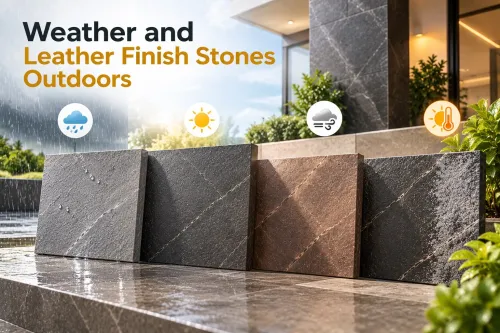
Wet a hidden edge or apply the proposed sealer to test pieces, keeping both treatments identical. Moisture, brushing pressure, finishing-machine settings, filler, resin, and uneven sealing can deepen or mute premium leather finish stone colours. Re-brushing or resealing can correct a surface difference; it cannot make geologically different slabs identical.
Record the stone name, quarry, thickness, finish, texture level, treatment, sealer, lighting, and wet-or-dry condition before approval. One approved sample does not guarantee identical colour across a bulk order.
Compare samples under the conditions the project will use
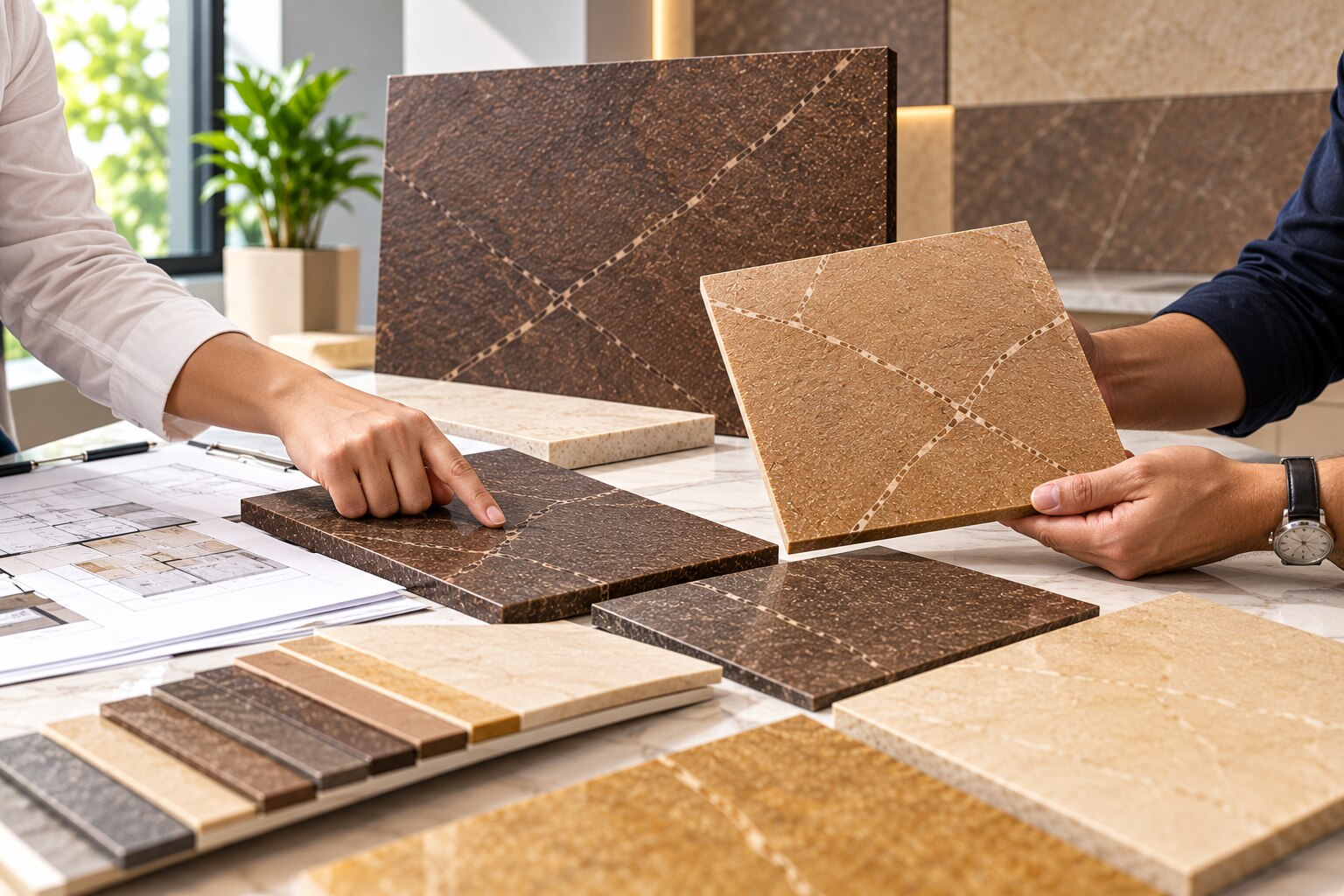
Approve leather premium finish stones for colour matching only after viewing them in the light and surface condition the project will use. Place full-size samples side by side, not in separate rooms or photographs, and inspect adjoining edges as well as the centre. A small sample can hide veining, fossils, tonal bands, and brushing variation.
| Comparison condition | Method | What the result tells you |
|---|---|---|
| Daylight | View the samples in the project’s actual daylight direction and time of day | Reveals the natural background tone and colour changes caused by outdoor light |
| Artificial light | Check them under the installed lamps, including warm and cool sources | Shows whether premium leather finish stone colours shift under interior lighting |
| Grazing light | Illuminate across the textured surface rather than straight on | Exposes shadows, brushing depth, and uneven texture that can look like colour change |
| Dry surface | Keep one unsealed, dust-free reference sample | Separates the base stone colour from moisture or sealer darkening |
| Sealed surface | Apply the proposed sealer and compare after its stated curing time | Shows the finish the installed stone will actually present |
Record the light source, viewing direction, dry or sealed condition, and sealer used. If the samples differ only after sealing, correct the application rather than rejecting the stone immediately. If the difference remains across every condition, investigate quarry material or processing lot; re-brushing cannot reliably make geologically different slabs identical.
Control shade variation when ordering in bulk
Reduce colour variation by locking the quarry source and production lot before cutting, then approving a physical finish sample against a defined acceptable range.
Use this purchasing sequence:
1. Ask the leather premium finish stones supplier for current photographs of the available batch, not an old showroom image. Record the stone name, quarry or source, slab thickness, and proposed quantity.
2. Reserve slabs from one quarry source, extraction batch, or block range whenever the quantity allows. For bulk leather finish stones, require the lot or block reference on the quotation, invoice, packing list, and delivery documents.
3. Inspect the complete bundle, not one representative slab. Compare adjacent slabs for background lightness, veining or fossil concentration, brushing depth, texture, gloss, filler condition, and visible moisture differences.
4. Approve a physical sample and a small project mock-up before production. Record whether the sample is wet or dry, the lighting used, finish description, brushing or texturing level, filler or resin treatment, and sealer. Include the accepted shade range in the purchase order.
5. Define the acceptance procedure: inspect slabs side by side under the project’s daylight and artificial lighting, reject unapproved lots before installation, and photograph the signed sample beside the bundle.
Do not demand laboratory-style exact colour uniformity. ASTM dimension-stone tests cover properties such as absorption, density, strength, and abrasion, not a universal natural-stone shade grade. A visual range tied to one controlled lot gives both buyer and supplier a workable standard.
Choose a practical colour range for each application
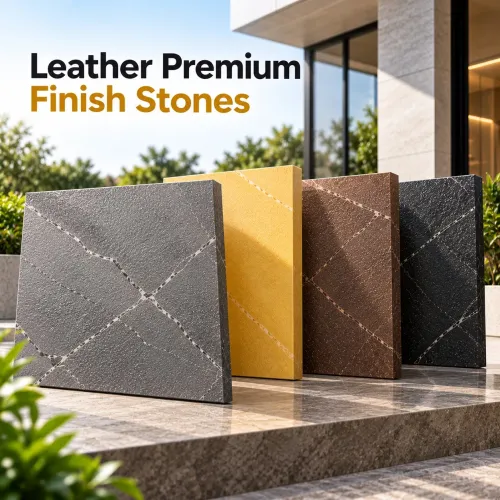
A showroom label is not a colour specification. Approve premium leather finish stone colours by their appearance across the intended surface, because wetness, foot traffic, dust, shadows, and warm lighting change the result.
| Colour | Suitable applications | Evaluation point |
|---|---|---|
| Grey | Floors, walls, paving, facades, steps | Check for blue or brown undertones beside the project’s cement, paint, and metalwork. Grey hides dust well but darker patches show on large floors. |
| Green | Feature walls, landscaping, selected floors | Confirm that green is consistent rather than caused by moisture or a quarry layer. Reject samples that turn brown or black when dry. |
| Black | Borders, steps, facades, paving accents | Inspect for pale brushing marks, resin gloss, and uneven sealer. Black absorbs heat and makes dust and water spots visible. |
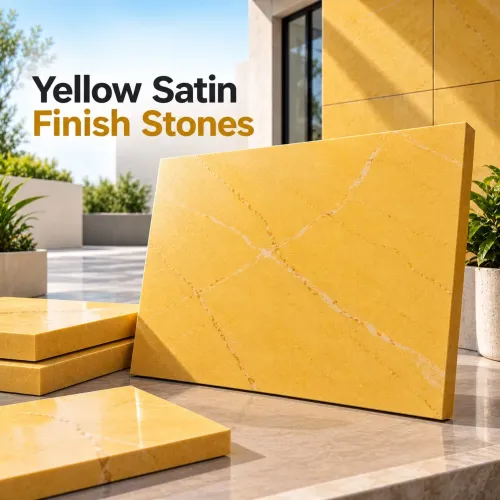
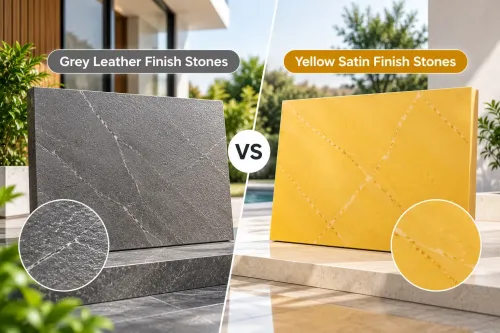
| Yellow | Floors, walls, paving, facades | Compare the full range from cream to ochre under daylight. Small tonal changes become obvious across repeated floor units. |
| Honey yellow | Steps, floors, walls, landscaping | Check whether the warm tone remains after drying and sealing. Match it against adjacent stone, grout, and landscape planting. |
| Multicoloured | Landscaping, feature walls, paving, facades | Approve the spread of colours, not one attractive piece. Use adjacent slabs to decide whether variation looks intentional or patchy. |
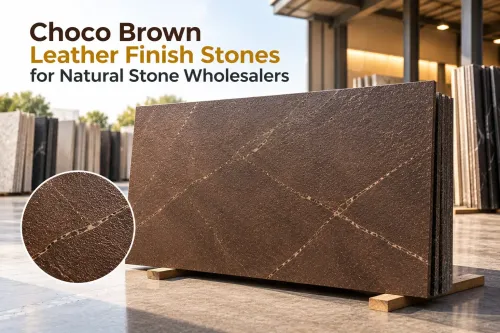
For tandur leather finish stones, record the accepted dry and wet range, brushing depth, sealer, and lighting condition. Reserve one quarry lot where possible; a finish adjustment can correct sheen, not fundamentally different stone.
Specify the finish, sealer, and acceptance range with your supplier
Record the finish, sealer, and acceptance range—not just a colour name—so the leather premium finish stones supplier and buyer judge the material after installation, not in different showroom conditions.
Include these fields in the purchase specification:
- Stone name, quarry or source, slab thickness, and intended application.
- Leather finish description, including brushing or texturing level and machine-side reference.
- Filler or resin treatment, including whether open pores, pits, or repairs are acceptable.
- Sealer brand or type, number of coats, sheen, curing time, and application method.
- Comparison conditions: dry and water-wet reference, daylight direction, colour temperature of artificial lighting, and viewing distance.
- Acceptance range for background lightness, veining or fossil concentration, surface texture, gloss, and filler visibility.
- Physical control sample, approved finish mock-up, lot number, and the signature or date of approval.
For bulk leather finish stones, reserve slabs from one quarry source and production lot when possible. Require the lot or block range on the quotation, packing list, and invoice, then inspect the complete bundle rather than one showroom piece.
Use wording such as “light to medium grey, moderate natural veining, low sheen, no contrasting repaired patches,” not “matching grey.” Exact colour uniformity is unrealistic across separate blocks.
Agarwal Stone Company can help buyers of tandur leather finish stones document the physical lot sample before production. ASTM tests cover absorption, density, strength, and abrasion; they do not create a universal colour grade for natural stone.
Frequently asked questions
How can you tell whether a colour mismatch comes from stone, texture, or lighting?
Clean and dry the slabs, place them edge to edge, and inspect broad areas under the project’s daylight and artificial lighting. Change one condition at a time: light direction, viewing angle, moisture, texture, or sealer.
How should you compare samples for leather-finished stone?
Compare samples in the same finish, with the same moisture condition and sealer status, under the lighting used in the completed project. Inspect full-size areas where possible instead of relying on showroom chips or photographs.
How do you control shade variation when ordering bulk leather-finish stones?
Ask the supplier to identify the quarry block or production lot, provide representative pieces from the lot, and keep an approved reference sample. Check delivered material against that sample before installation.
What colour range is practical for different stone applications?
Use a tighter range for small, highly visible interiors and coordinated walls. A wider natural range is easier to accept across large floors, paving, landscaping, and areas where installation breaks up continuous colour.
What should you specify with a leather premium finish stones supplier?
Write down the stone type, finish, sealer or no-sealer condition, sample lighting, lot identification, acceptable colour range, and the process for rejecting or replacing material outside that range.
Keywords