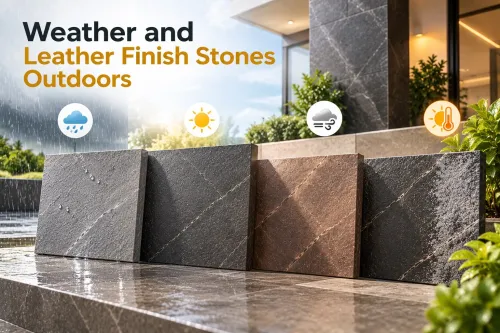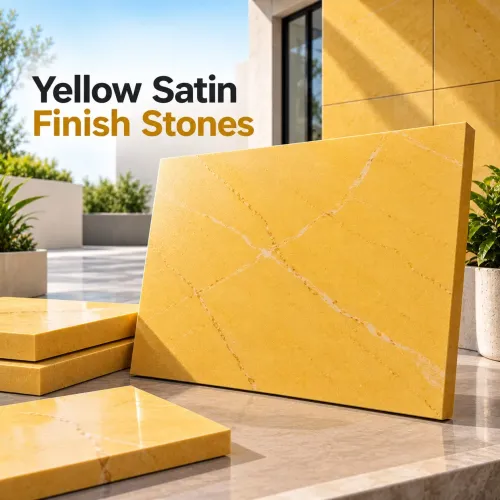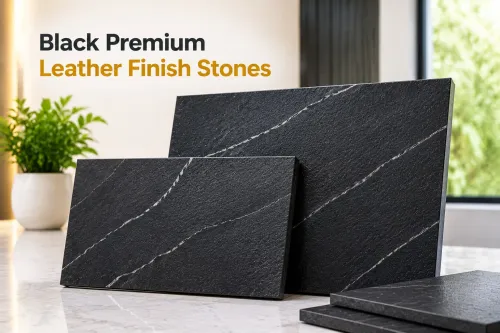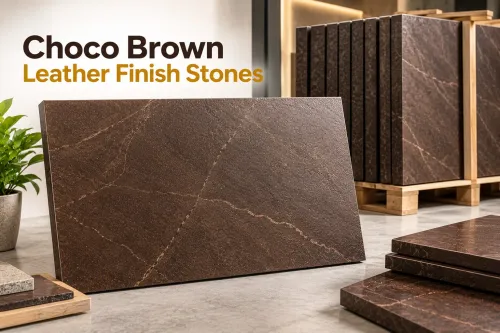
The words leather and satin describe surface treatments, not fixed industry standards, while grey and yellow describe stone colour ranges that can vary from batch to batch. By comparing finished samples under real lighting, wet conditions, traffic, and cleaning requirements, you can choose the better surface and write a purchase specification that prevents surprises.
Key takeaways
- Leather and satin describe surface texture, not limestone colour.
- Use grey leather stone where grip and muted texture matter.
- Choose yellow satin stone for a smoother, warmer visual finish.
- Specify finish, thickness, edge detail, sealer, and slip requirements in writing.
What leather and satin actually mean on limestone
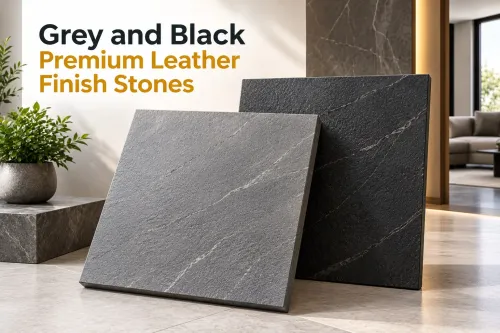
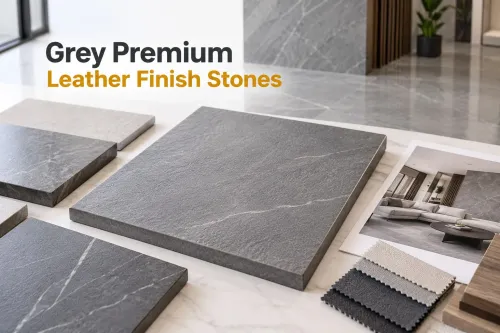
Leather and satin describe how limestone is worked after sawing; they do not identify its colour. Greay leather finish stones, more commonly written grey leather-finish stone, have a tactile surface created by brushing, light texturing, or abrasive tooling.
The label is not a universally controlled ASTM finish designation, so one processor’s leather may feel rougher or show less sheen than another’s.
| Surface feature | Leather finish | Satin finish |
|---|---|---|
| Texture | Brushed or lightly irregular, with visible grain and micro-relief | Smooth to lightly honed, with less surface relief |
| Light reflection | Scatters light and reduces glare | Reflects light softly without a mirror-like polish |
| Touch and appearance | More tactile; tooling marks can remain visible | More even-looking and easier to read as a continuous surface |
| Buying risk | The same label can cover different textures and gloss levels | “Satin” can also vary in smoothness between processors |
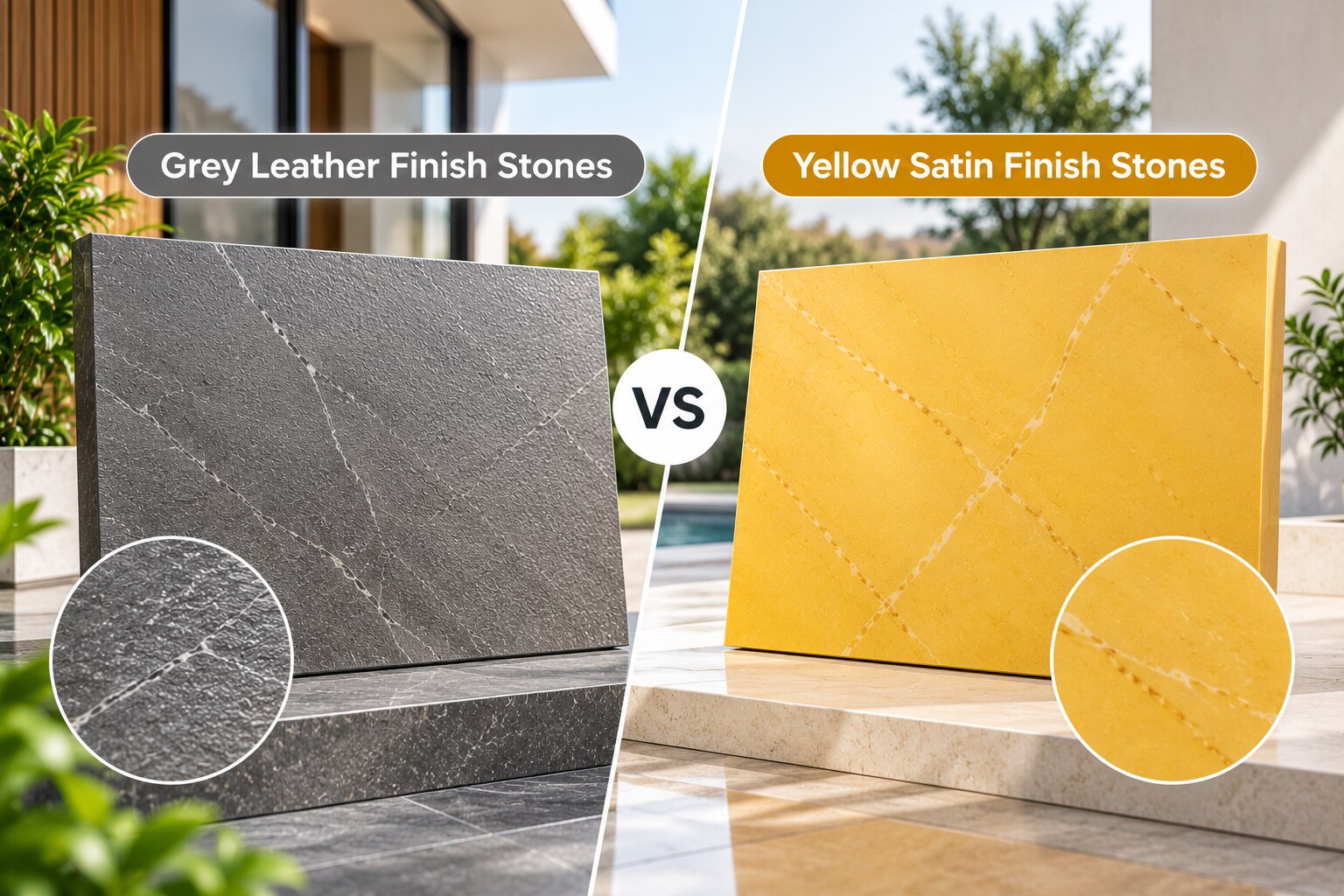
Therefore, greay leather finish stones and yellow satin finish stones are not a fair colour comparison by themselves. You are comparing both stone colour and surface treatment: texture can make a grey appear paler, while a smoother satin surface can strengthen yellow or cream tones.
Compare finished samples at the intended thickness, with the same seal condition, lighting, and viewing distance. Approve a representative lot rather than a catalogue photograph, and inspect it dry and wet. Neither finish prevents limestone etching from acidic cleaners or cement removers.
How grey and yellow stone change under light, water, and sealer
A fair grey leather stone comparison starts with matched finished samples: same nominal thickness, calibration, sealer condition, lighting, and viewing distance. Texture scatters light, so grey leather-finish stone can look lighter and less saturated; smoother yellow satin can make cream and yellow tones appear stronger.
| Option | Under light | With water | After sealing |
|---|---|---|---|
| Grey leather | Direct sun reveals texture, pits, veining, and uneven reflectivity. Warm indoor light can soften grey into beige or taupe. | Darkens in patches where pores and texture hold water, making variation more obvious. | Often deepens the grey and increases contrast between high and low areas. |
| Yellow satin | Sun highlights fossils and colour variation without strong glare. Warm lamps intensify yellow and cream tones. | Looks richer and more uniform until water evaporates, then pale areas can reappear. | Can become noticeably deeper yellow, so an untreated sample is not enough for approval. |
Use a two-panel mock-up with the intended grout, adhesive, sealer, cleaning method, and lighting. Check dry and wet colour, edge visibility, dirt removal, and appearance after sealing before ordering a large quantity.
Do not assume leather means safer when wet. Texture depth, contamination, slope, footwear, and maintenance control traction; request a wet dynamic coefficient-of-friction test for a wet floor, ramp, pool surround, or outdoor paving. For exposed paving, also compare water absorption, abrasion resistance, breaking strength, and weathering resistance, because colour and finish alone cannot predict wear.
Which finish suits floors, wet areas, walls, and outdoor paving
For dry interior floors, grey leather-finish stone is a practical choice when you want a low-reflectance surface that disguises minor marks. Yellow satin finish stones suit rooms where a smoother, warmer-looking floor coordinates easily with fittings. Neither finish name proves traction.
| Application | Grey leather-finish stone | Yellow satin-finish stone |
|---|---|---|
| Interior floors | Useful for rustic, commercial, and high-traffic schemes; approve the texture for cleaning and barefoot comfort. | Useful where a calmer, smoother surface and easier routine wiping matter. |
| Wet areas | Use only after wet slip testing; texture alone does not guarantee safer footing. | Use only after wet slip testing; a smooth-looking finish is not automatically slippery. |
| Walls | A strong choice for feature walls because texture adds depth and reduces glare. | Practical for larger wall fields where consistent colour and restrained texture are wanted. |
| Outdoor paving | Consider it for sheltered paths and patios after testing weathering, drainage, and slip performance. | Consider it for low-glare paving only when the surface passes the project’s exterior requirements. |
Demand a wet dynamic coefficient-of-friction test, or the project’s specified slip test, for bathrooms, pool surrounds, ramps, and exposed paving. Require results for the actual stone, texture, slope, contamination, and footwear conditions.
For a reliable grey leather stone comparison, approve two mock-up panels using the intended grout, sealer, adhesive, lighting, and cleaning method. Compare dry and wet colour, barefoot and shod traction, dirt removal, edge visibility, and sealer darkening. Define satin by permitted gloss and texture, not by the label alone.
Cleaning, stain control, and sealing for both finishes
Choose the sealer by absorption and texture, not colour: a leather surface needs more brushing during cleaning, while satin usually needs less effort but shows marks more clearly.
Greay leather finish stones can hold dust, grout residue, and organic soil in their micro-relief; a smoother yellow satin surface is easier to wipe but exposes scratches, filler patches, and uneven cleaning.
| Finish | Cleaning and stain control | Sealer decision |
|---|---|---|
| Grey leather | Vacuum or sweep first, then use a pH-neutral stone cleaner and a soft nylon brush on textured areas and grout edges. Blot oil, wine, and food spills quickly. | Test absorbency with water. Use a penetrating impregnating sealer if the stone darkens or absorbs within minutes; apply thin coats and remove residue before it dries. |
| Yellow satin | Dust and wipe with a microfiber mop or soft cloth. Avoid abrasive pads, acidic cleaners, bleach, and strong solvents, which can dull or etch the flatter surface. | Test a finished sample under the intended lighting. Choose a penetrating sealer when stain resistance is needed, but confirm it does not deepen the yellow tone excessively. |
| Either finish | Clean cement haze before sealing; sealing over residue locks in a dull film. | Follow the sealer manufacturer’s coverage, drying, and recoating instructions, then test for colour change and slipperiness. |
Seal only a clean, dry surface. Reapply after the water-bead test shows faster absorption than the sealed sample, not on a fixed calendar. A sealer reduces staining; it does not prevent dirt from collecting in leather texture or remove the need for prompt spill cleanup.
What to specify when ordering Tandur limestone
Order against a written specification, not the label “Tandur.” Ask a Tandur stone supplier in Telangana for quarry or processing location, batch identification, nominal and minimum thickness, calibration status, finish method, resin or filler disclosure, available sizes, edge treatment, packing method, and current absorption, strength, and slip-performance data.
| Check | Grey leather-finish stone | Yellow satin-finish stone |
|---|---|---|
| Approval sample | Same thickness and calibration as the order; inspect texture and gloss | Same thickness and calibration; inspect colour, reflectivity, and uniformity |
| Mock-up | Use intended grout, sealer, adhesive, and lighting; test wet and dry traction | Use the same products and conditions; check sealer darkening and shade shift |
| Variation | Record acceptable grey range, veining, fossils, and edge visibility | Record acceptable yellow range, veining, fossils, and edge visibility |
| Finish description | Specify brushing, texturing, or abrasive tooling and permitted roughness | Specify satin process and permitted gloss variation |
Before dispatch, ask Agarwal Stone Company for photographs of the packed batch and confirm its identification against your approved mock-up.
- Count cartons or crates and record breakage before signing delivery documents.
- Measure random pieces for minimum thickness, length, width, and squareness.
- Reject mixed batches unless the shade range was approved in writing.
- Check finish consistency, chipped corners, staining, damp patches, and filler repairs.
- Keep the batch number, invoice, test reports, and delivery photographs for installation records.
Frequently asked questions
What do leather and satin mean on limestone?
Leather and satin describe how limestone is finished after sawing. Leather is brushed, lightly textured, or abrasively tooled; satin is smoother with a soft, low-sheen surface.
How do grey leather and yellow satin limestone respond to light, water, and sealer?
Grey leather limestone usually shows texture and changes in tone as light moves across it. Yellow satin limestone presents warmer colour with less surface shadow. Water temporarily deepens both colours, while sealer can increase colour depth and sheen.
Which finish suits floors, wet areas, walls, and outdoor paving?
Grey leather finish suits floors and paving where a tactile surface is useful. Yellow satin works well on walls and interiors where a smoother appearance is preferred. Test both finishes for wet areas and confirm slip performance before ordering.
How should you clean and seal leather and satin limestone?
Remove dust with a soft brush or vacuum, use a pH-neutral stone cleaner, and wipe spills promptly. Avoid acids, vinegar, abrasive powders, and bleach. Test sealer on a spare piece before treating the installation.
What should you specify when ordering Tandur limestone?
State the colour, leather or satin finish, slab or tile dimensions, thickness, tolerances, edge profile, quantity, shade variation, intended use, sealer requirement, and delivery packaging. A Tandur stone supplier in Telangana should confirm these details in the quotation.
Keywords