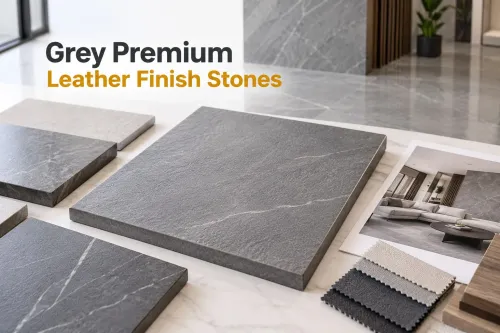
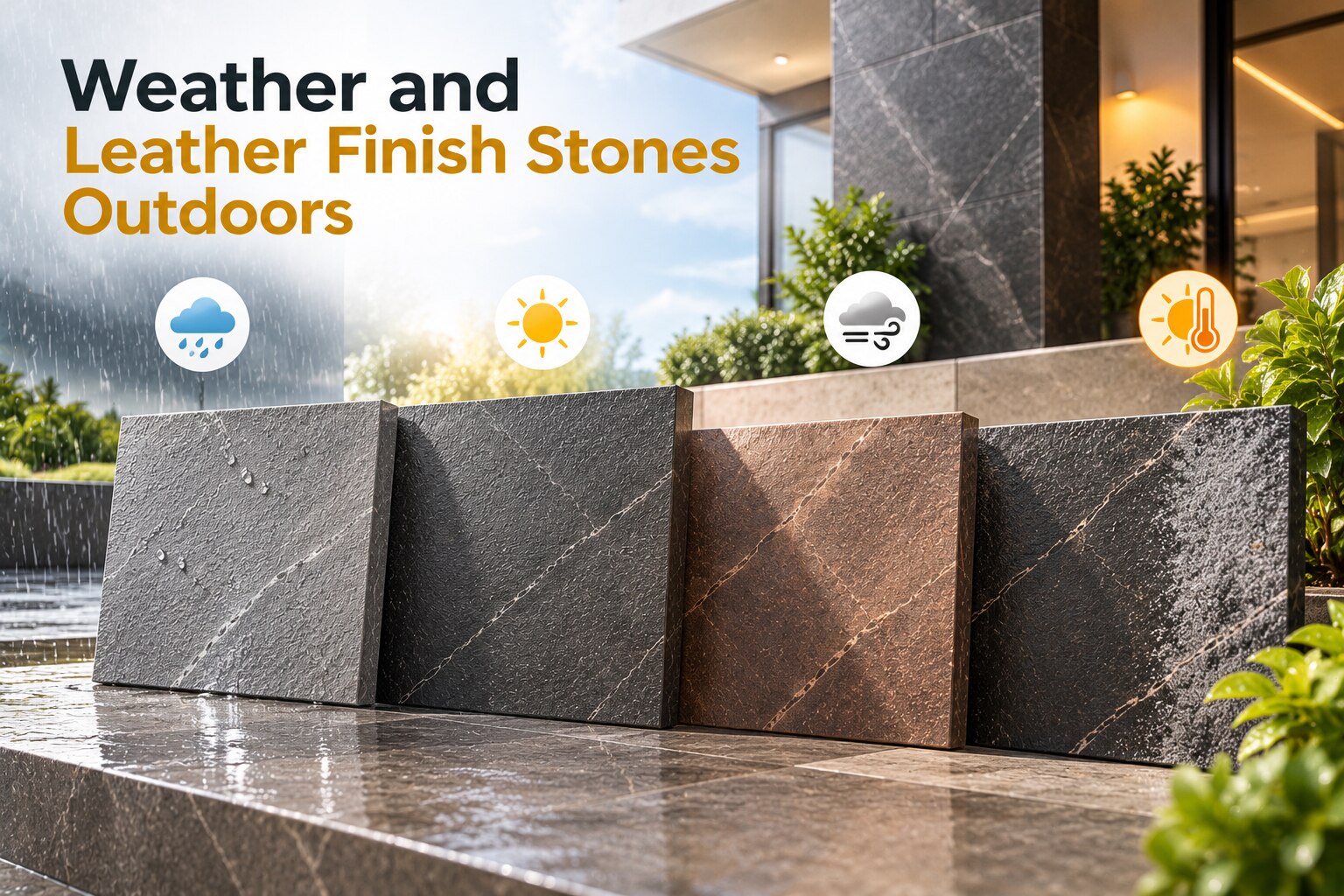
Rain, heat, sunlight, freezing water, soil, and maintenance chemicals can change an outdoor leather-finished limestone installation in ways that are not always finish defects. By the end, you will know how to separate weather damage from ordinary outdoor staining, compare finishes for different applications, and specify the stone, installation, testing, and maintenance details that reduce risk.
Key takeaways
- Seal vulnerable areas and prevent standing water after installation.
- Use leather finish outdoors where texture improves grip and stains stay manageable.
- Choose honed or cleft finishes when drainage, cleaning, or freeze-thaw risk dominates.
- Request samples, water-absorption data, finish consistency, and packing details before bulk ordering.
What Rain, Soil, and Wet-Dry Cycles Do to Leather-Finished Stone
Rain does not merely make leather-finished limestone look darker for a few hours. Water enters pores and shallow brushed depressions, then evaporates unevenly; repeated wet-dry cycles leave tide lines, standing-water marks, mineral deposits, and patchy colour. Damp soil, leaves, algae, and bird droppings add organic staining, while oxidation can alter mineral colour.
Texture exaggerates variation compared with honed stone, so a change is not automatically a finish failure.
To separate weathering from an ordinary outdoor stain, inspect the pattern and its response:
- A broad edge, darker low area, or matching change beneath a downspout points to repeated wetting or poor drainage.
- Green or black growth concentrated in shade, joints, and persistently damp depressions points to biological growth.
- A sharply defined splash, drip, footprint, oil halo, or bird-dropping mark points to a local contaminant.
- A colour shift that remains after the slab dries, or roughened, pale, flaking areas, suggests etching or surface damage rather than simple dampness.
Do not use acid cleaners as general outdoor cleaners. Limestone is carbonate stone; acidic washes, de-icing chemicals, and acidic deposits can dull or etch the face. Test cleaning on a spare piece, rinse thoroughly, and compare wet and dry samples outdoors against an agreed range.
These checks expose leather premium finish stones weather problems before the phrase premium leather finish stones weather becomes a performance assumption.
How Sun, Heat, and Freezing Temperatures Stress the Surface
Direct sun can fade exposed areas unevenly and heat the stone enough to create thermal movement. Ultraviolet exposure, dust, biological growth, and mineral oxidation alter apparent colour; ridges and depressions in a leather texture make the change look stronger than it would on a flat honed surface.
Compare samples outdoors when wet and dry against an agreed range sample.
Cold weather exposes four failure points:
- Water trapped in pores or surface depressions freezes, expands, and contributes to scaling, flaking, cracking, and loss of the textured face.
- Saturated bedding layers keep slabs damp from below, even after the surface appears dry.
- Open joints and unprotected edges admit water and increase freeze-thaw stress.
- Poor drainage leaves standing water that darkens the stone and magnifies damage from repeated freezing.
A leather finish is not a frost-resistance rating, and a penetrating sealer cannot correct missing slope, drainage, movement joints, or defective edge details.
For leather premium finish stones in an outdoor installation, request water absorption, density, flexural strength, and freeze-thaw results for the actual product or quarry lot; ASTM C97/C97M covers absorption and bulk specific gravity, while ASTM C880/C880M covers flexural strength.
Where Leather Finish Works—and Where It Creates Risk
Leather premium finish stones can suit outdoor projects when the surface receives foot traffic, drains quickly, and does not need a uniform, mirror-like appearance. Covered patios, garden paths, low-traffic terraces, and vertical walls are stronger candidates than exposed platforms that stay wet.
Choose from the project conditions, not the finish name:
- Confirm the actual stone, thickness, finish depth, edge treatment, and installation assembly as one system.
- Specify a wet-slip test for the proposed finish; tactile roughness alone does not prove safe grip.
- Provide falls, open drainage routes, and properly detailed joints so water cannot remain beneath or beside the slabs.
- Keep acidic cleaners, de-icing chemicals, and strong masonry washes away from limestone, including Tandur limestone; they can etch carbonate stone and dull its texture.
| Application | Leather finish may work when | Choose another finish when |
|---|---|---|
| Covered patio | Drainage is reliable and traffic is moderate | Spills, grit, or furniture movement demand the easiest cleaning |
| Garden path | The route is well drained and appearance can vary | Mud, algae, or leaf litter will remain on the surface |
| Pool surround | The tested finish meets the specified wet-slip criterion | Standing water or bare-foot safety leaves no tolerance for uncertain grip |
| Driveway or busy plaza | The stone and installation pass required strength tests | Heavy traffic, turning loads, or snow and ice create freeze-thaw risk |
A penetrating sealer can slow staining, but it cannot waterproof joints or bedding. If consistent colour, aggressive cleaning, severe freeze-thaw exposure, or high traffic is essential, select a finish and stone assembly with test evidence for those conditions rather than assuming “premium” means weather-rated.
How Leather Compares With Honed, Polished, Cleft, River-Bed, and Hammered Finishes
Choose the finish by measured wet-slip performance and water behaviour, not by touch. A rough surface can still hold water, dust, algae, or oil, while falls, joints, bedding, and outlet capacity determine whether water drains.
| Finish | Wet grip and drainage | Cleaning and appearance | Exposure considerations |
|---|---|---|---|
| Leather | Texture may improve traction, but directional brushing and valleys need a wet-slip test. | Holds more soil and residue than honed stone; uneven colour looks stronger when wet. | Premium leather finish stones weather differently by stone, texture depth, porosity, and climate. |
| Honed | Smoothness does not guarantee safe wet grip; drainage depends on the installation. | Easier to rinse and scrub, with a consistent matte appearance. | Wet-dry marks and stains show clearly; verify the specific limestone. |
| Polished | Usually a poor choice for exposed walking surfaces when wet; polish does not drain water. | Easy to wipe but highlights scratches, dulling, and etching. | Sun, rain, and grit quickly challenge the reflective surface. |
| Cleft | Raised planes can provide contact variation, but sharp or uneven areas need testing. | Dirt collects in natural recesses; colour variation looks pronounced. | Inspect for weak layers and water entry before freeze-prone use. |
| River-Bed | Rounded texture is not a slip rating; joints and surface falls control drainage. | Debris can lodge between stones and complicate sweeping. | Suits water-associated designs only after checking movement and saturation. |
| Hammered | Dimples can increase traction, yet standing water or contamination can defeat that benefit. | Requires rinsing that reaches each depression. | Check for frost damage, edge breakage, and uneven fading. |
View samples outdoors in both wet and dry conditions. Compare them with an agreed range sample, and specify the project’s wet-slip test and acceptance value rather than treating texture as proof.
What to Check Before Ordering Bulk Leather Finish Stones
Approve bulk leather finish stones only after matching the actual stone, finish, installation assembly, and climate to documented performance. Request results for the quarry lot, not a generic product sheet.
Evidence to compare before approval:
| Item | What to request | What it reveals |
|---|---|---|
| Water performance | ASTM C97/C97M absorption and bulk specific gravity | How readily the stone takes up rainwater and darkens |
| Strength | ASTM C880/C880M flexural strength at the proposed thickness | Resistance to cracking under loads and movement |
| Cold exposure | Freeze–thaw results for the intended climate | Risk of cracking or spalling where trapped water freezes |
| Slip performance | Wet-slip test on the proposed finish, with the project acceptance criterion | Whether textured brushing performs safely when wet, dusty, or contaminated |
| Appearance | Control sample and outdoor mock-up viewed wet and dry | Acceptable variation in colour, veining, tooling direction, and weathering |
To prevent leather premium finish stones weather problems, inspect drainage slope, joint width, edge treatment, setting bed, movement joints, paving thickness, and the route for water leaving the assembly. A leather finished stone supplier should also identify the quarry lot, batch, brushing intensity, production date, and available matching stock.
Test the proposed penetrating sealer on the exact finish. Check for residue in depressions, uneven darkening, reduced vapour movement, and whether water still enters joints or edges; sealer is not a waterproof membrane. Retain spare pieces from the approved lot for repairs.
Agarwal Stone Company should provide these records before you approve a bulk order, not after installation begins.
Related products
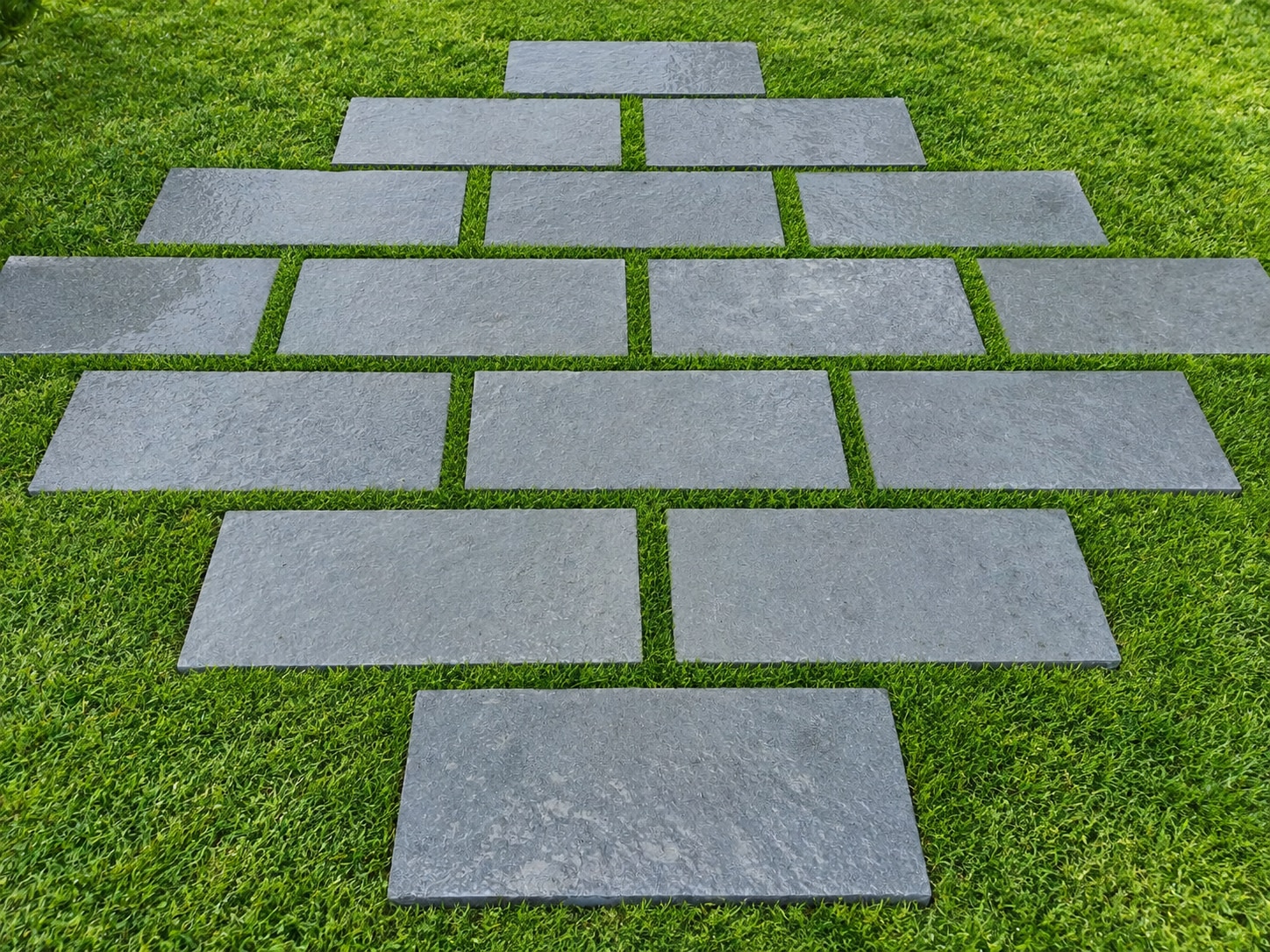 | Leather Finish Stones Leather Finish Stones – Natural Beauty with a Premium Finish Give your spaces a stylish and natural look with Leather Finish Stones, carefully... View product → |
 | Tandur Stone Grey Leather Stones are basically Lime stone slabs. They are excavated naturally from the depth of land and brought to processing units for... View product → |
Frequently asked questions
What weather problems affect leather-finished stone outdoors?
Rain enters pores and brushed depressions, while wet-dry cycles leave tide lines, standing-water marks, mineral deposits, and uneven colour. Soil, leaves, algae, and bird droppings add staining.
How do sun, heat, and freezing temperatures stress leather-finished stone?
Sun and heat can expose colour variation and accelerate drying after wetting. Freezing conditions create risk when water remains in pores, joints, or cracks and expands as it freezes.
Where does a leather finish work best outdoors?
It suits areas where a textured surface and added slip resistance matter, such as covered walkways, patios, garden paths, and feature walls with reliable drainage.
How does leather compare with honed, polished, cleft, river-bed, and hammered finishes?
Leather offers shallow texture with a softer appearance; honed is smoother, polished is more reflective and slippery when wet, cleft is strongly split and irregular, river-bed is naturally rounded, and hammered is mechanically dimpled.
What should you check before ordering bulk leather finish stones?
Check outdoor samples after wetting and drying, slab thickness, dimensions, colour variation, water absorption, finish consistency, edge treatment, packaging, replacement quantities, and delivery protection.
Related products
 | Leather Finished Ocean Green Tandur Stone are lime stones. The upper surface of the stone is processed to give the leather texture and very feathery soft finish. View product → |
 | Grey Natural Stone ₹26 This product is used for outdoor purposes. View product → |
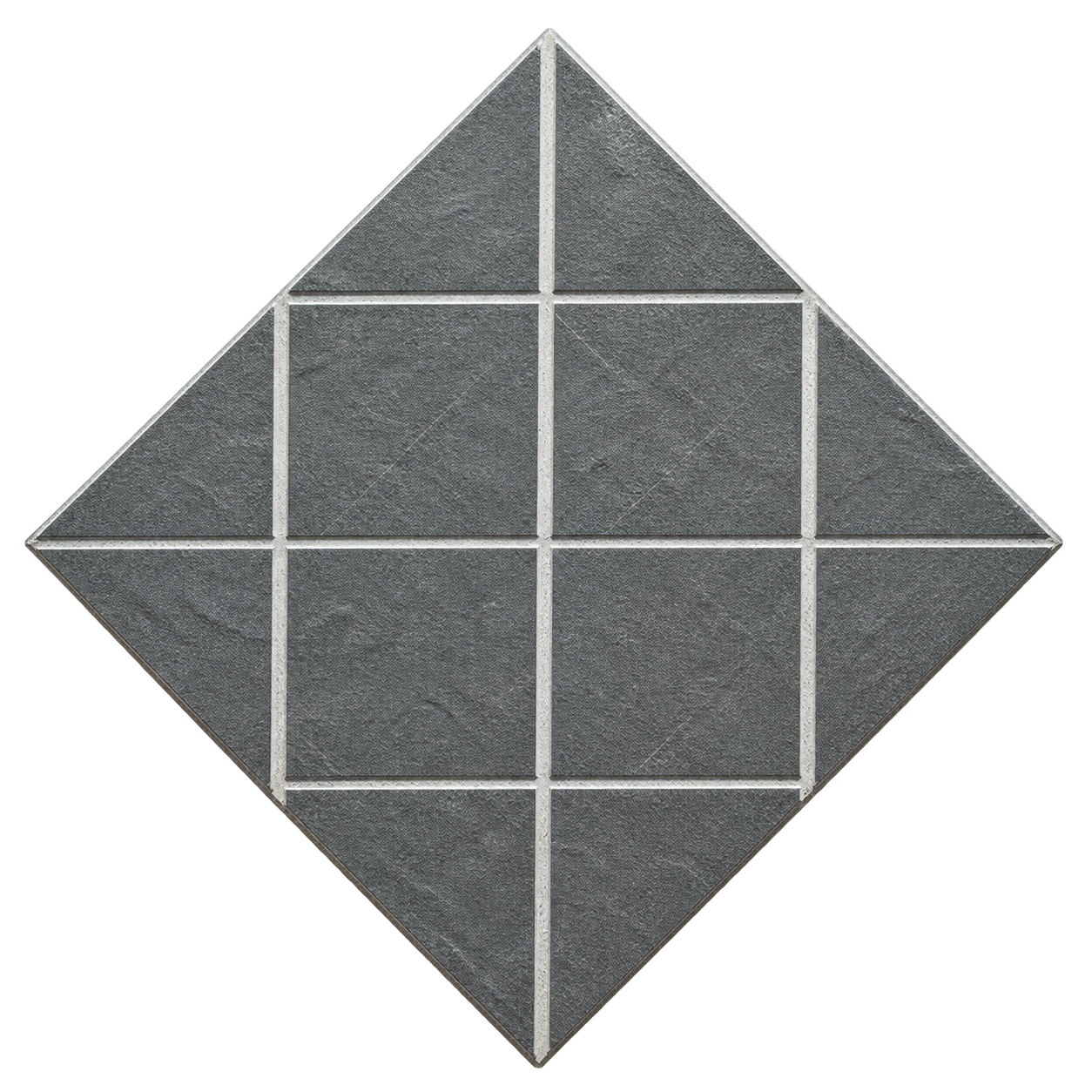 | Pattern Stones Grey Diamond Pattern Stone Grey Diamond Pattern Stone is a stylish and durable Tandur stone product featuring a distinctive diamond-pattern design. View product → |
 | Leather finished stones Tandur stones when compared to other costly flooring options . View product → |
Keywords